How to handle AI inputs as a culture
As much as I hate generative-LLM output in systems, and how quickly it’s being pushed as the cure-all for business problems, I have to admit that a broken clock can be “right” every so often. LLM outputs are rapidly becoming as useful as boilerplate generators, or fuzzers, or the RAD IDE environments.
How we as a society are reacting to “AI” outputs reminded me of the immune response of the human body – namely, some of us are okay with it (largely because the use case doesn’t matter) and some of us are VERY MUCH NOT OKAY with it, to the point where we have violent reactions to its existence in our spaces.
Generative LLM = Virus
As one of my favorite authors put it:
Imagine that you encounter a signal. It is structured, and dense with information. It meets all the criteria of an intelligent transmission. Evolution and experience offer a variety of paths to follow, branch-points in the flowcharts that handle such input. Sometimes these signals come from conspecifics who have useful information to share, whose lives you’ll defend according to the rules of kin selection. Sometimes they come from competitors or predators or other inimical entities that must be avoided or destroyed; in those cases, the information may prove of significant tactical value. Some signals may even arise from entities which, while not kin, can still serve as allies or symbionts in mutually beneficial pursuits. You can derive appropriate responses for any of these eventualities, and many others.
You decode the signals, and stumble
[…]
There are no meaningful translations for these terms. They are needlessly recursive. They contain no usable intelligence, yet they are structured intelligently; there is no chance they could have arisen by chance.
The only explanation is that something has coded nonsense in a way that poses as a useful message; only after wasting time and effort does the deception becomes apparent. The signal functions to consume the resources of a recipient for zero payoff and reduced fitness. The signal is a virus.
The signal is an attack.
We aren’t wrong to treat the invasion of plausibly-looking bad data like we would any virus. The problem is that our “programming immune systems” haven’t had to deal with such an onslaught of plausible-but-bad data before. As Paracelsus said, “the dose makes the poison.”
So, extending the metaphor of the human body, let’s look at how our bodies have actually dealt with previous invasions, specifically of retroviruses – the kind that want to persist their sequences into our bodies and proliferate forever.
Retroviral Response
A Survey of Human Genes of Retroviral Origin shows us that ~8% of our tissue sequences have retroviral components. Eight percent of anything isn’t all that much, but what the document shows is the sequences are not evenly distributed. Places like the placenta, the testes, or even the skin would have 10-100x the retroviral sequences as tissues of the thymuss, or the bone marrow. And there were almost no sequences to be found in the heart or the liver.
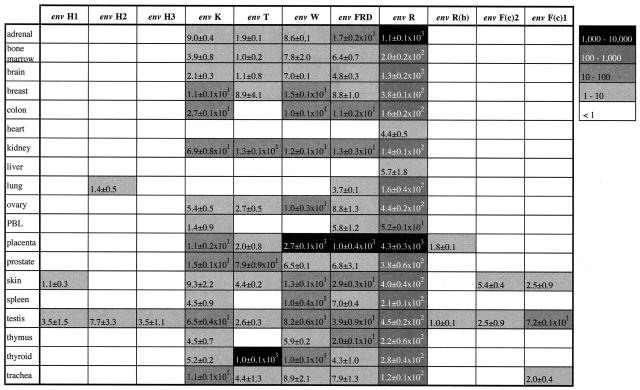
This tells us that, where having some unexpected coding sequences or errors is low-risk or even expected (the placenta has to deal with a literal foreign-body with its own DNA for 40 weeks), introduction of viral material isn’t all that important. In some cases, it might have even been helpful to the reproductive outcomes of our species.
Conversely, when you have a very critical system like the liver or the heart, nothing can be tweaked or modified or replaced. Every part of that system needs to function as-intended, or the host dies.
The human body has responded and set up a procedure to fight the invasion of viral content – terminate the invaders, sure, but also, leave the battlefield alone when it’s done.
We’re going to have some volume of AI-generated content in our software, in our libraries, our videos, etc, because it’s not critical for the things we do to be 100% perfect every time. If we treat the presence of AI content as a “kill it with fire” response every time, we’ll end up in the equivalent of a cytokine storm and burn ourselves out (or remove ourselves entirely) just trying to fight it.
If only we’d fought the nazis with such fervor.
Citations for relevant papers:
de Parseval N, Lazar V, Casella JF, Benit L, Heidmann T. Survey of human genes of retroviral origin: identification and transcriptome of the genes with coding capacity for complete envelope proteins. J Virol. 2003 Oct;77(19):10414-22. doi: 10.1128/jvi.77.19.10414-10422.2003. PMID: 12970426; PMCID: PMC228468.
Chuong EB. The placenta goes viral: Retroviruses control gene expression in pregnancy. PLoS Biol. 2018 Oct 9;16(10):e3000028. doi: 10.1371/journal.pbio.3000028. PMID: 30300353; PMCID: PMC6177113.